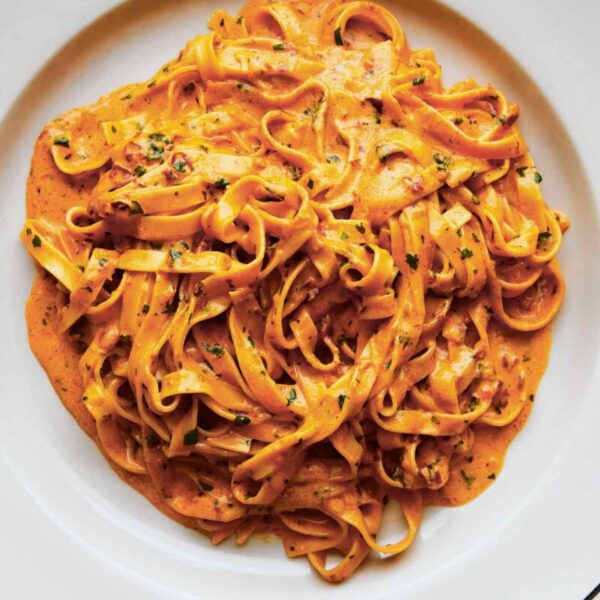
Fettuccine With 'Nduja, Lemon & Mascarpone
Ingredients
- 450 g fresh fettuccine
- 75 g ’nduja
- 500 g mascarpone
- Finely grated zest and juice of 1 lemon
- 4 tbsp finely chopped flat-leaf parsley
- Sea salt
- Parmesan, finely grated, to finish
Instructions
- Put the ’nduja into a bowl and bring to room temperature, so it becomes malleable. Add the mascarpone and lemon zest and mix together until well combined to form a smoothish paste. (This can be stored in a sealed container in the fridge for up to 5 days.)
- For the pasta, in a large cooking pot, bring 4–5 litres water to the boil and add a fistful of salt.
- Put the ’nduja-mascarpone paste into a pan large enough to easily hold the cooked pasta. Add half a mug (about 120ml) of the seasoned pasta water and heat gently, stirring, to melt the paste and create a sauce. Take off the heat.
- Loosen the pasta bundles so they won’t stick together as they cook.
- Drop the fettuccine into the boiling water and cook for about 1–1½ minutes. Drain the pasta as soon as it’s ready, keeping two mugs of pasta water.
- Transfer the pasta to the ’nduja sauce and add half a mug (about 120ml) of pasta water, the lemon juice, chopped parsley and a pinch of salt.
- Stir vigorously for at least 30 seconds until all the ’nduja is mixed around the pasta and you have a smooth, creamy sauce. If the sauce is too dry, add splashes of the reserved pasta water to loosen it as you stir: you want it to be loose and for the strands of pasta to slide freely over each other, and for a layer of sauce to cover the bottom of the pan. Taste and adjust the seasoning with salt and/or pepper if required.
- Serve on hot plates with a creamy halo of sauce around the pasta. Finish with grated Parmesan.
Notes
The sauce sucks up the Parmesan quickly and can easily become dry. So, be sure to have that excess halo around the plated pasta: my visual reference for the sauce is a slow-moving lava field. Also works with: fresh pici; dried fettuccine, spaghetti, bucatini, linguine, penne, fusilli, farfalle