
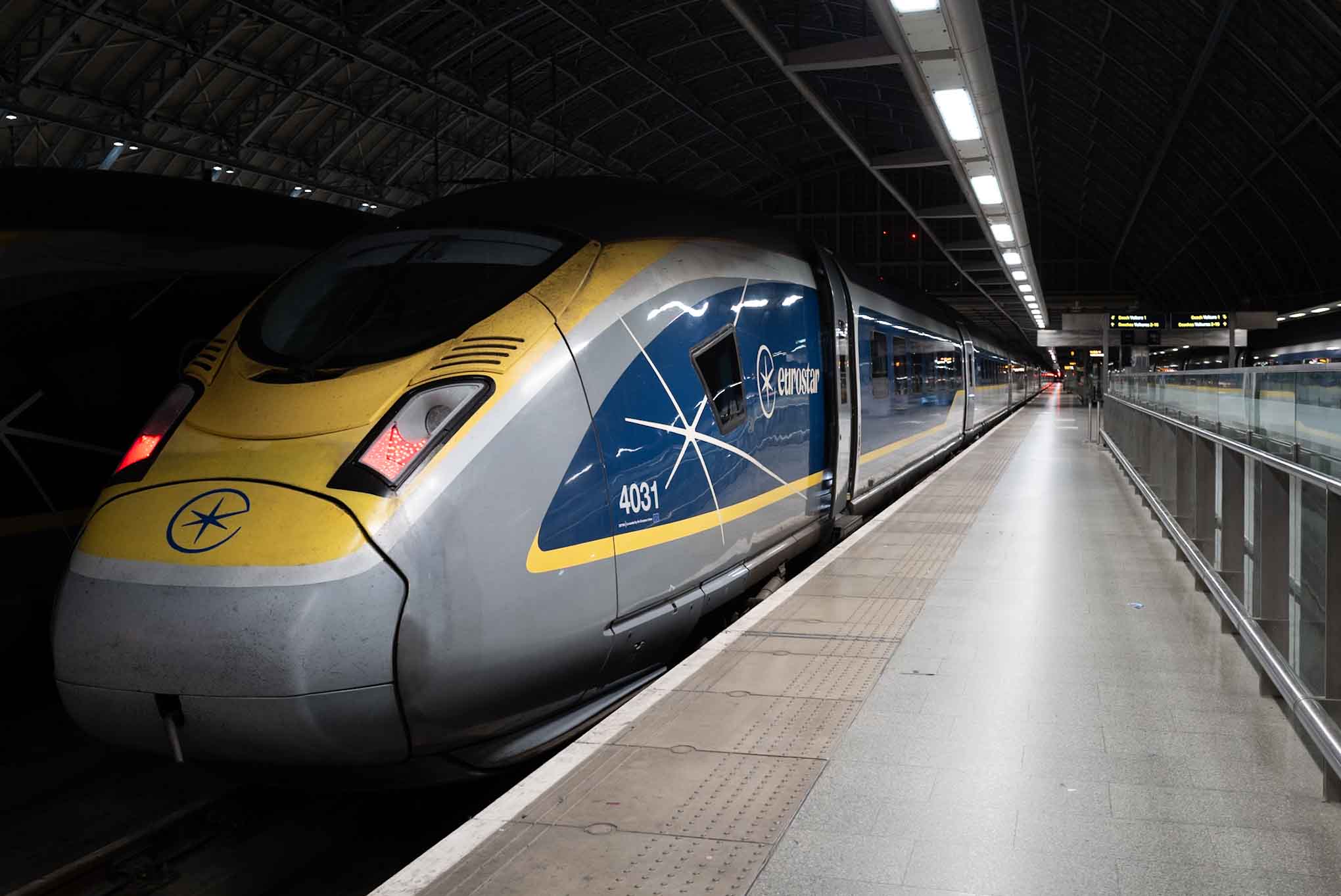
When we moved from Geneva to London, one of the small surprises was the Champagne on the Eurostar. We expected the usual story, an overpriced cheap bottle, the kind of thing you order because you are travelling and not because you actually want to drink it. Instead, what arrived at the table was organic, properly made, and good enough that we started ordering it on every crossing. It became a small ritual, a glass as we approached the Channel, the landscape shifting from Kent to Pas-de-Calais outside the window.
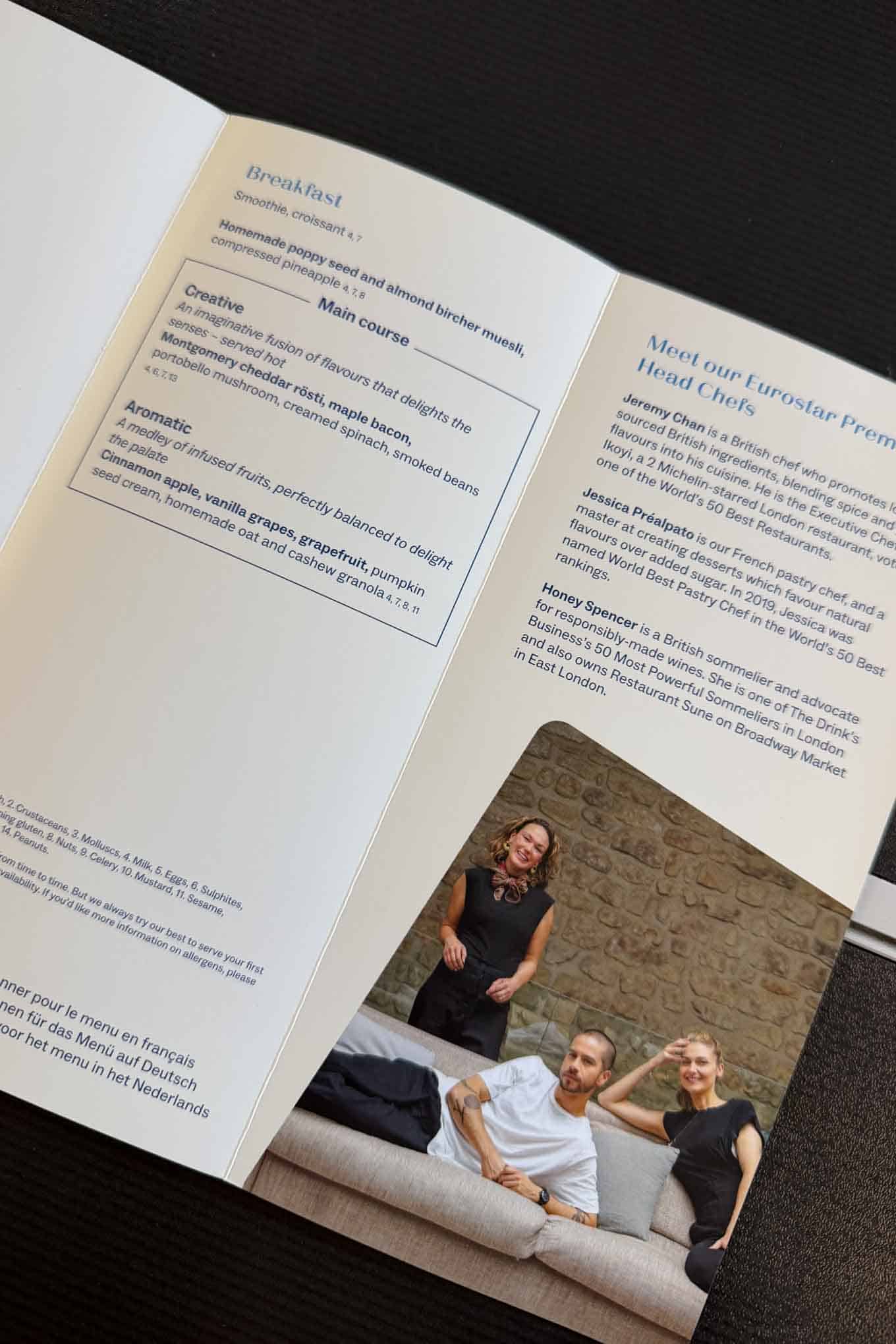
It took us a while to understand why the wine was so consistently better than it had any right to be. The answer turned out to be Honey Spencer, the British sommelier behind some of the city’s most considered natural wine programs and the co-owner of Sune in Hackney, one of our favourite restaurants in London. Honey curates the Eurostar list, and once you know that fact, the whole experience reframes itself. The wine is not an afterthought, rather, it is the point.
We had been planning a weekend in Paris with friends from Napa, and the trip gave us a reason to introduce them to our world here, the wine bars and small restaurants of the 10th arrondissement that we keep coming back to, and the Eurostar journey that has become part of how we drink between the two cities.
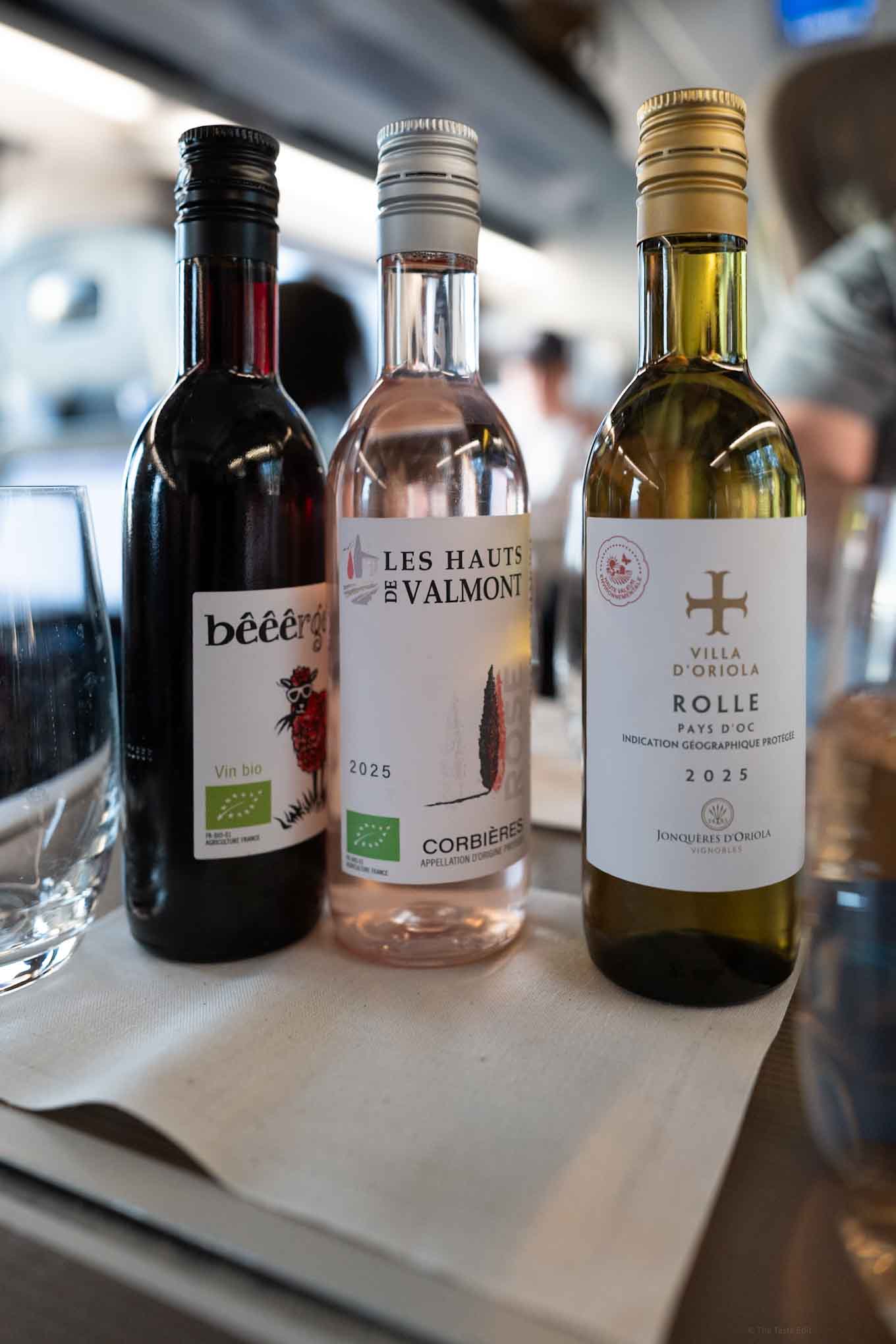
Premier is the highest of Eurostar’s three classes, and the wine list is where the difference is most legible. The list itself is small and tightly edited, which is the right approach for a train. Every bottle is chosen for the same instinct, low-intervention winemaking, small producers working sustainably, balance over novelty. There is a Champagne Fleury, organic and round, the kind of bottle that has built our affection for this journey over years of crossings. The whites and rosés range across a Villa d’Oriola Rolle from Pays d’Oc and a Les Hauts de Valmont grenache-based rosé from Corbières. The reds include a Petit Roubié syrah, all clean fruit and gentle structure, and a Château Marie Plaisance cabernet franc and merlot from Bergerac, the latter with a label so charming, a wide-eyed sheep in sunglasses on the front of a bottle called Bééérgerac, that we would order it on the strength of the design alone. The still wines arrive in small format bottles, which is part of why a list this size works on a train, you can taste across the selection in the time it takes to cross the Channel. The Champagne is poured from full bottles, as it should be.
What you notice tasting through the list is how cohesive it is. These are not natural wines chosen for their funk or their novelty. They are well-balanced, food-friendly bottles from small producers working sustainably, and they hold up beautifully against the gentle pressure of a fast moving train.
By the time the train slowed into the outskirts of Paris on the way out, we had not tasted a drop. The morning service is breakfast, and the wine experience properly begins on the return. We mention this because it shapes the rhythm of the trip, the day in Paris is the build-up, the journey home is where the bottles open. The trip closes the way a good dinner closes, slowly, with the landscape darkening outside the window and the producers Honey has chosen carrying you back to St Pancras with fond memories of France.
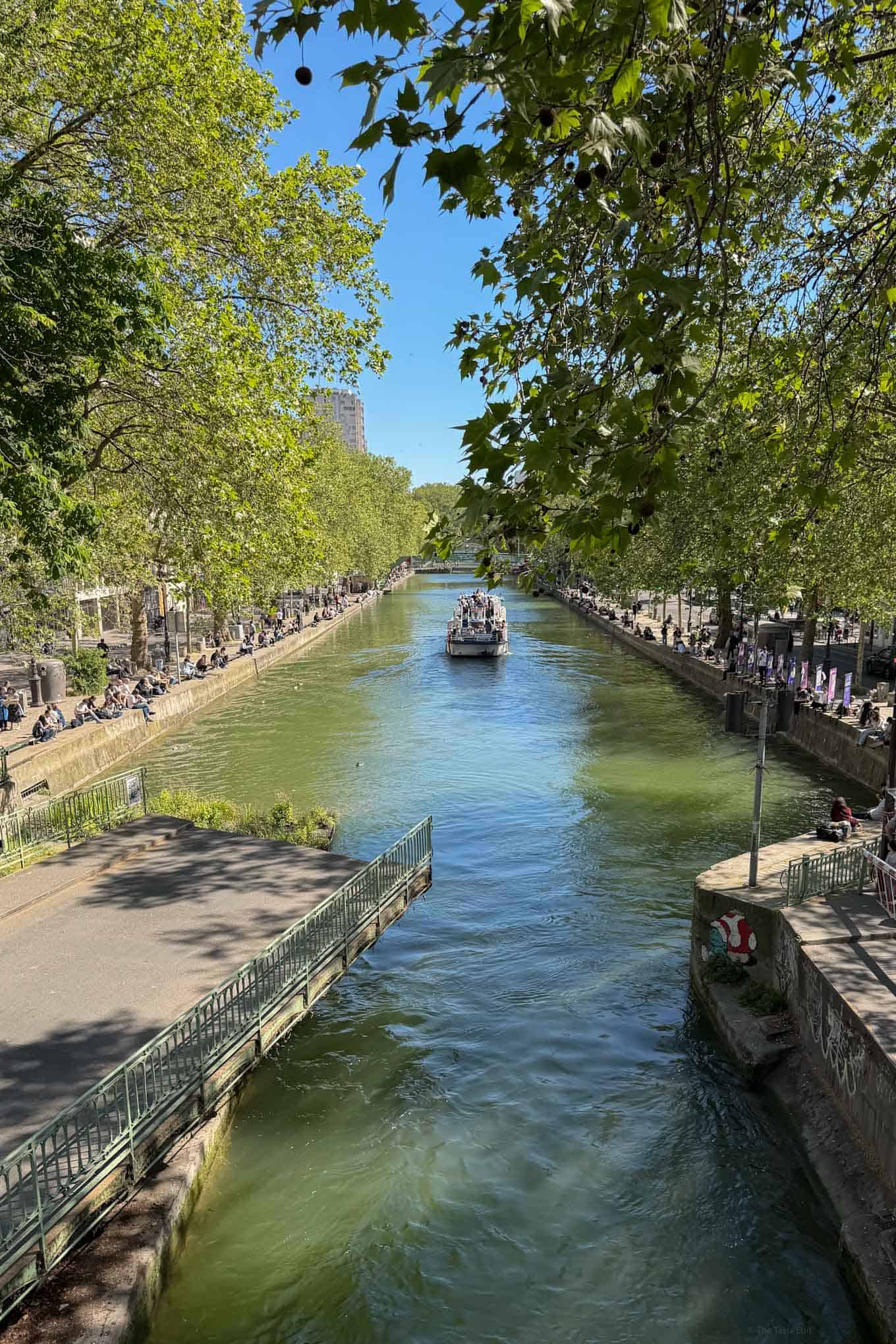
Gare du Nord is one of the most useful Paris terminals for this. It opens directly onto the 10th arrondissement, which over the past decade has become the most interesting neighbourhood in the city for anyone serious about natural wine. Step off the train and you are within walking distance of more good wine bars and small natural-leaning restaurants than you could see in a long weekend. The Canal St-Martin runs through the centre of it. Belleville climbs up the hill to the east. The Marché des Enfants Rouges sits to the south in the upper Marais. All of it is accessible on foot.
A 48-hour guide to the 10th and around
This is the version of the weekend we have done many times, and the version we wanted to share with our friends from Napa. Everything below is on foot from Gare du Nord.
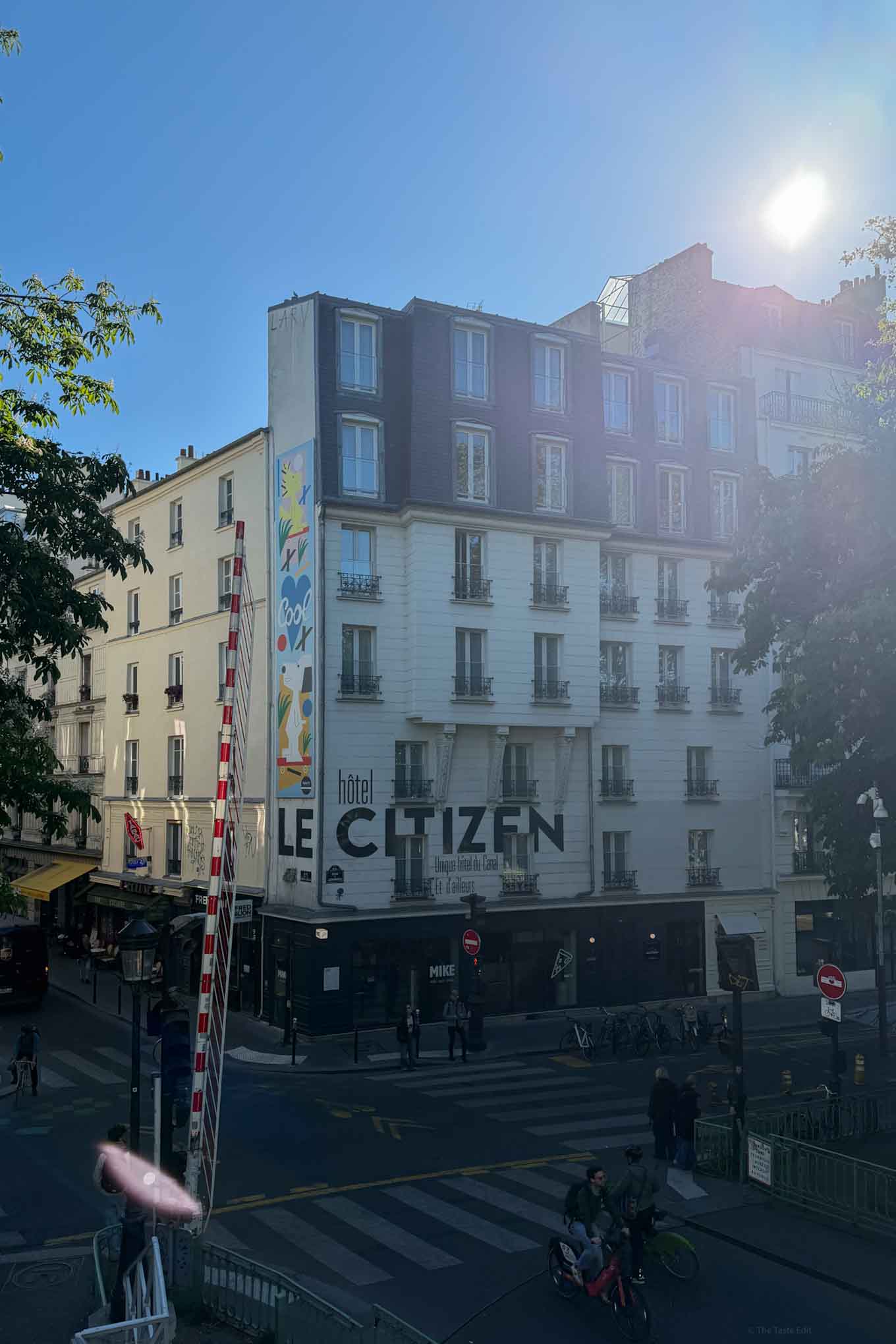
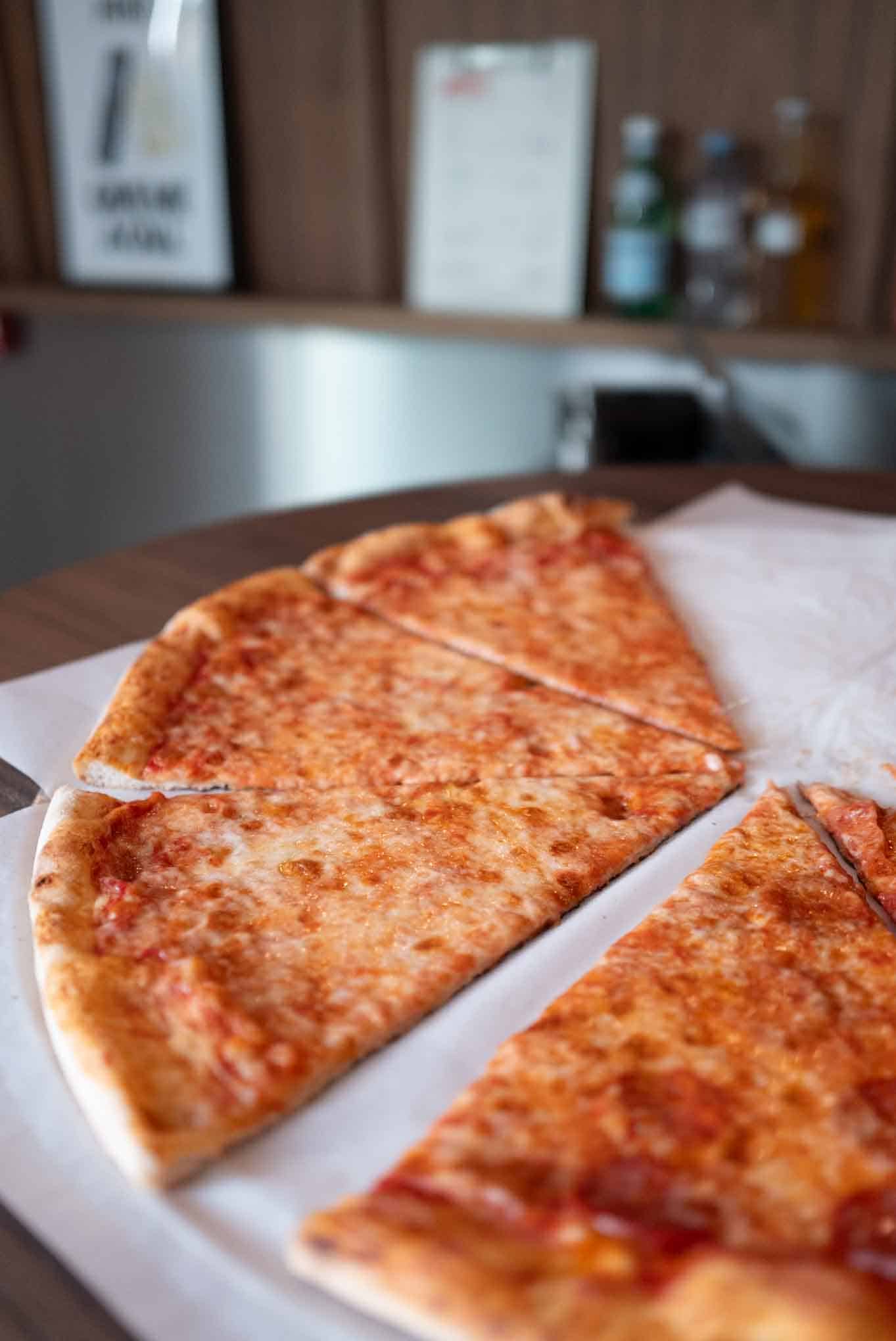
Where to stay. Le Citizen Hotel sits directly on the Canal St-Martin, which puts you at the centre of the natural wine scene without needing a taxi. The rooms are large by Paris standards, which matters more than people admit when you are travelling for more than a night. There is a downstairs space called Mike’s Pizza that serves slices of New York Style pizza and natural wine, where you can sit at the bar or take a slice and a glass to the canal for lunch. Good accommodation in this corner of Paris is genuinely hard to find.
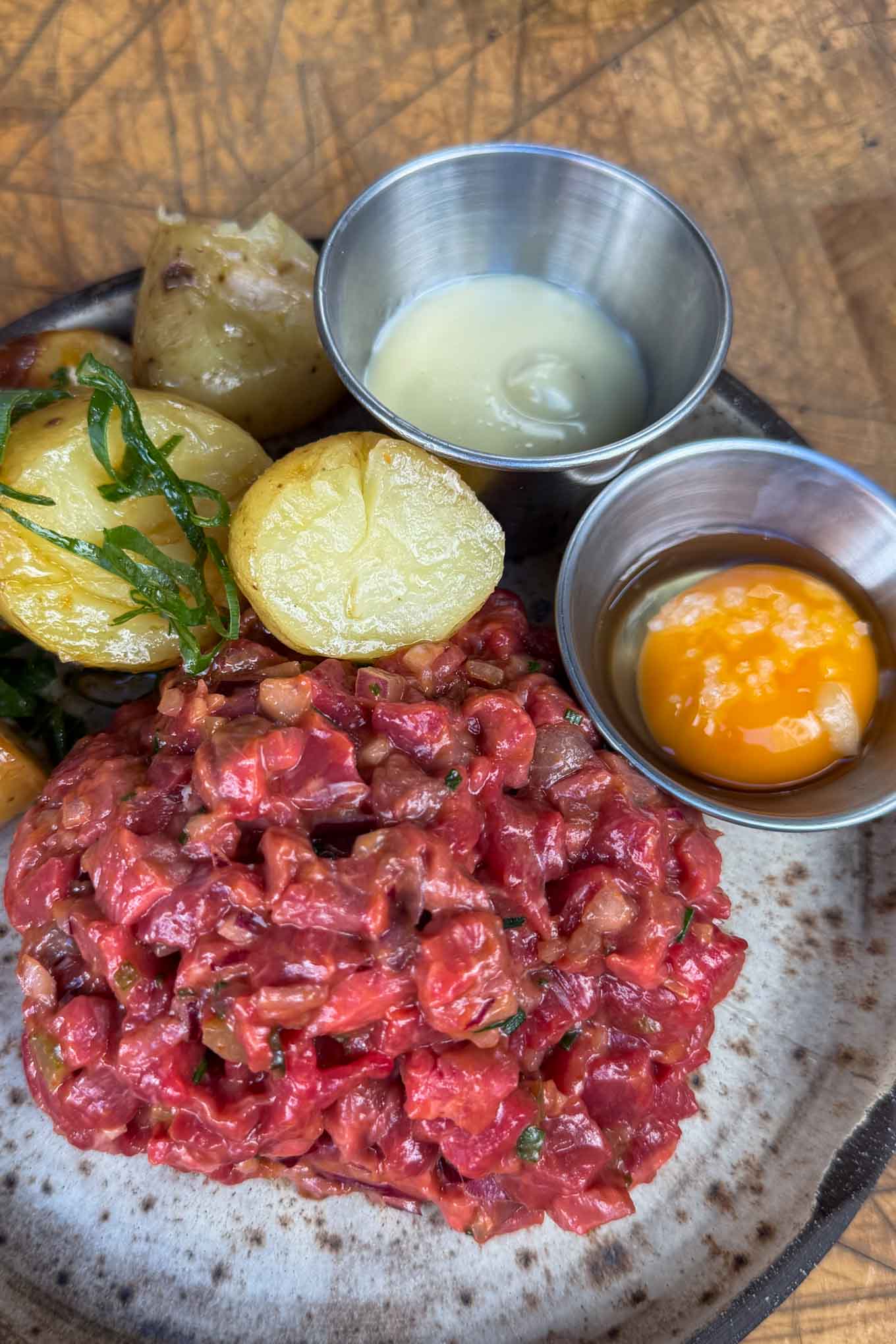
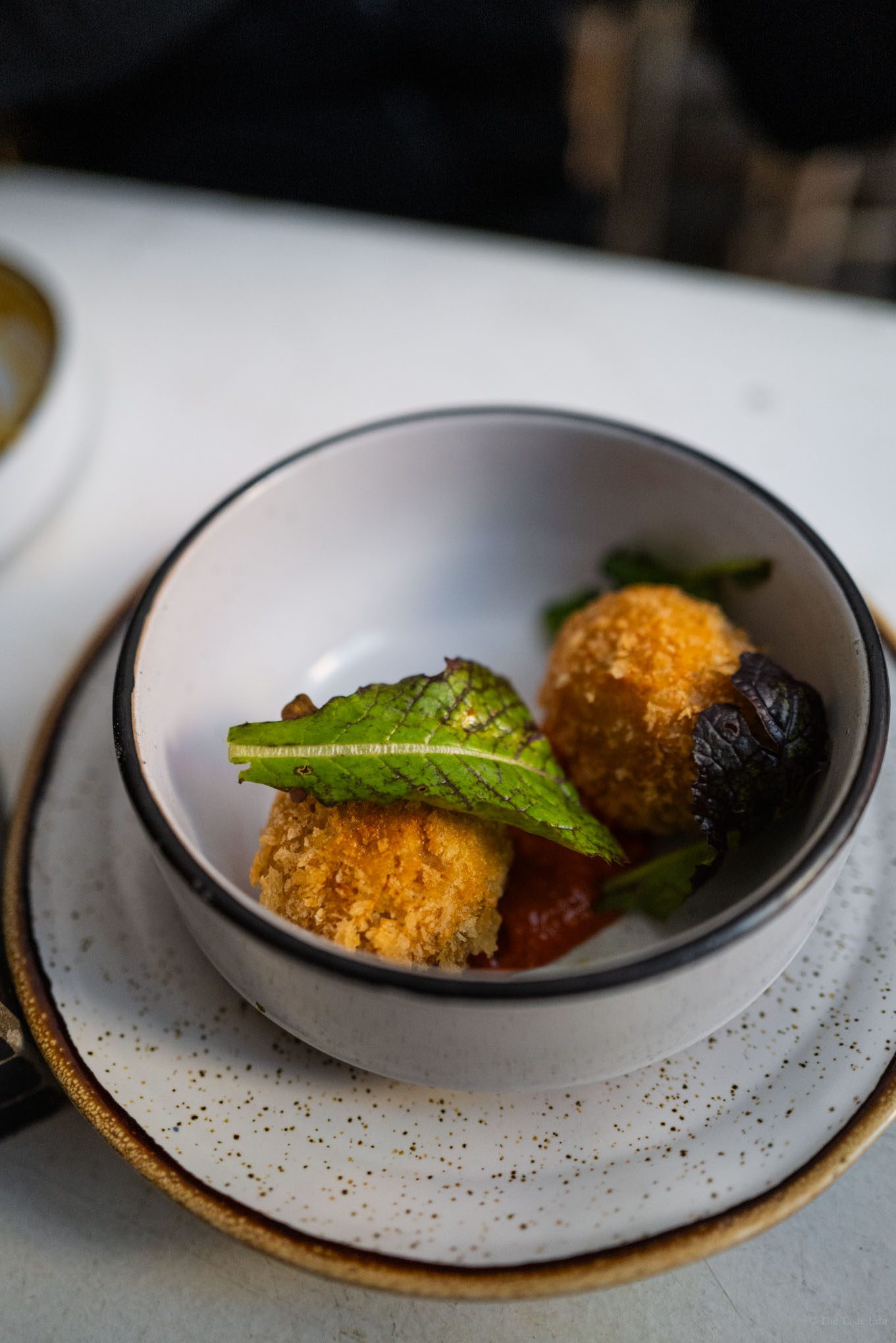
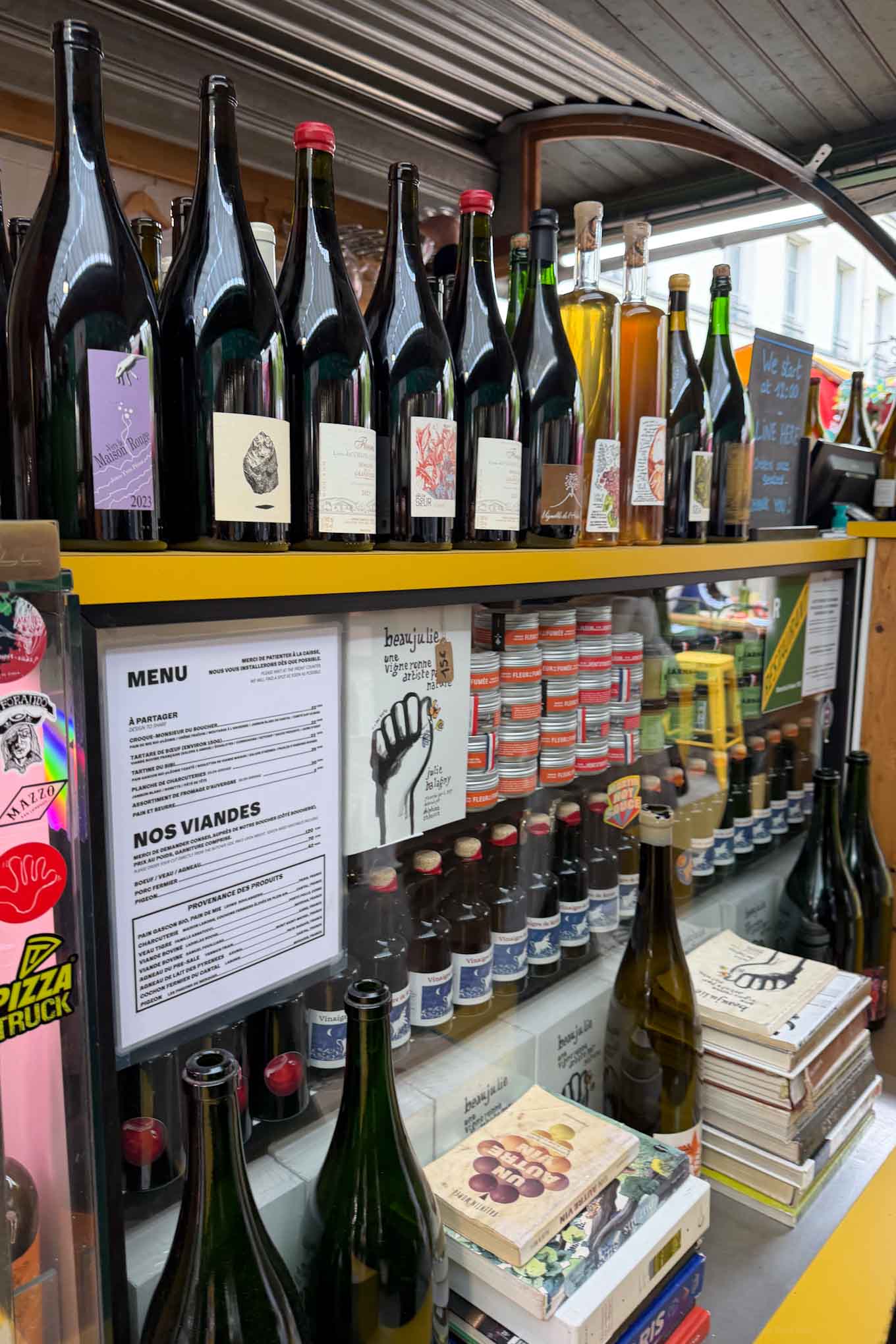
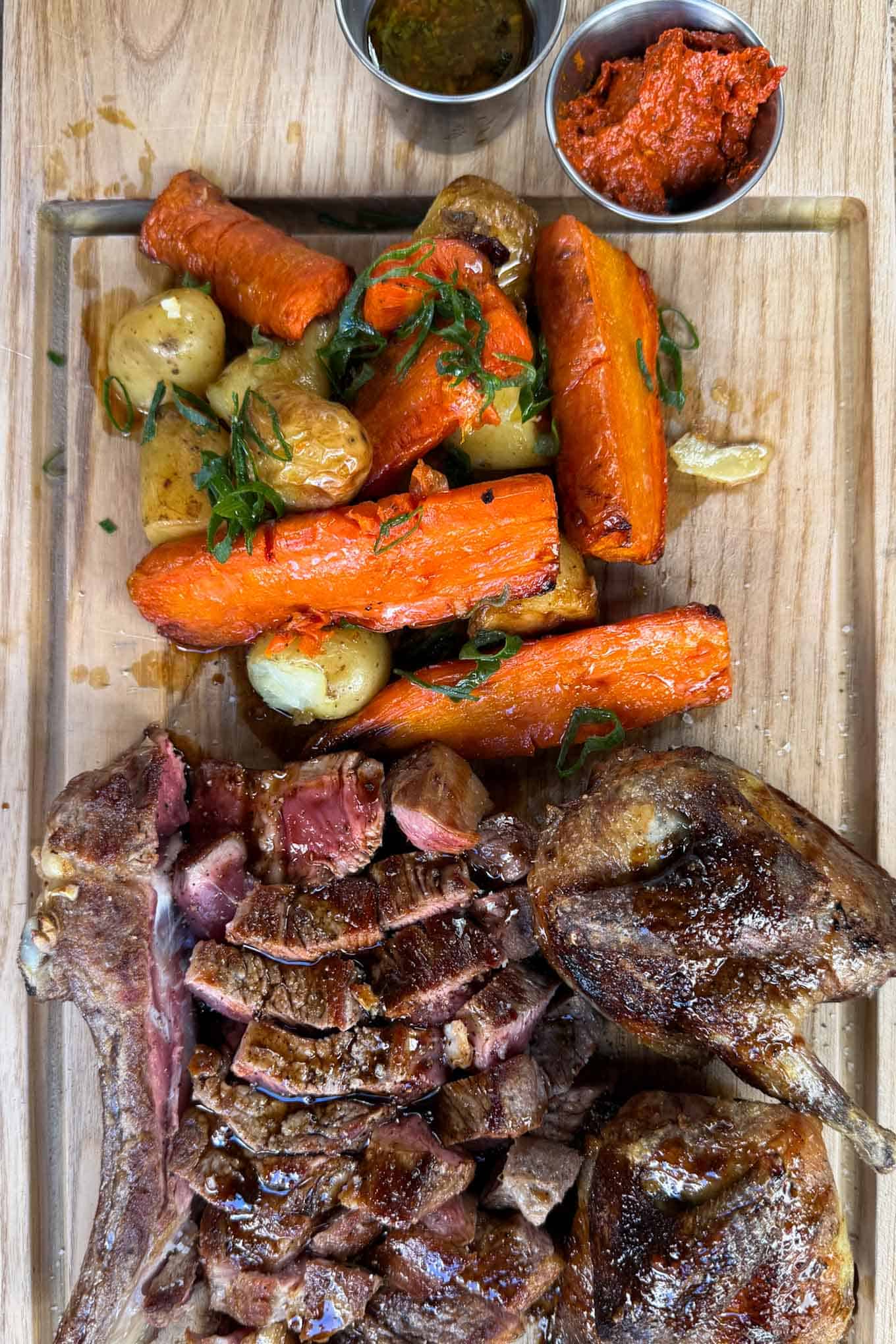
Lunch. If you arrive toward the end of lunch service, head to Les Enfants du Marché, tucked inside the Marché des Enfants Rouges. They tend to keep the kitchen open later than most places in Paris, the menu changes daily and leans toward fish, and the wine selection is poured by the glass with suggestions to match what you order. Le Boucher du Marché sits next door and works on a similar instinct, you choose your meat from the counter, they cook it, and they bring out wine suggestions to go with it. Neither place keeps a printed list, both are better for it. Le Cambodge, near the canal, is the long-running Cambodian spot worth knowing about for a quieter, family-friendly lunch. Les Enfants Perdus is another reliable canal-side option with a wine bar across the street that’s worth a stop on its own.
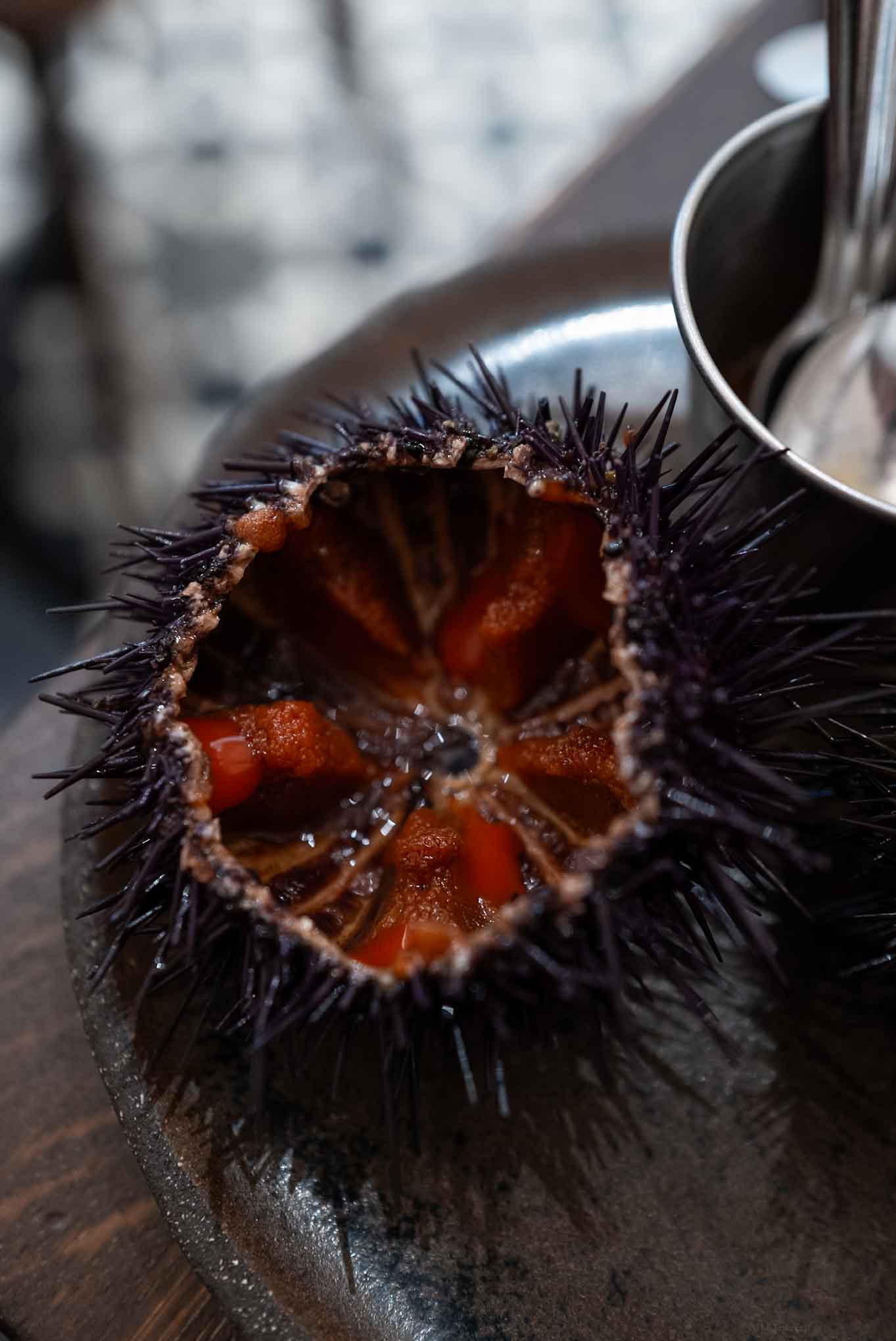
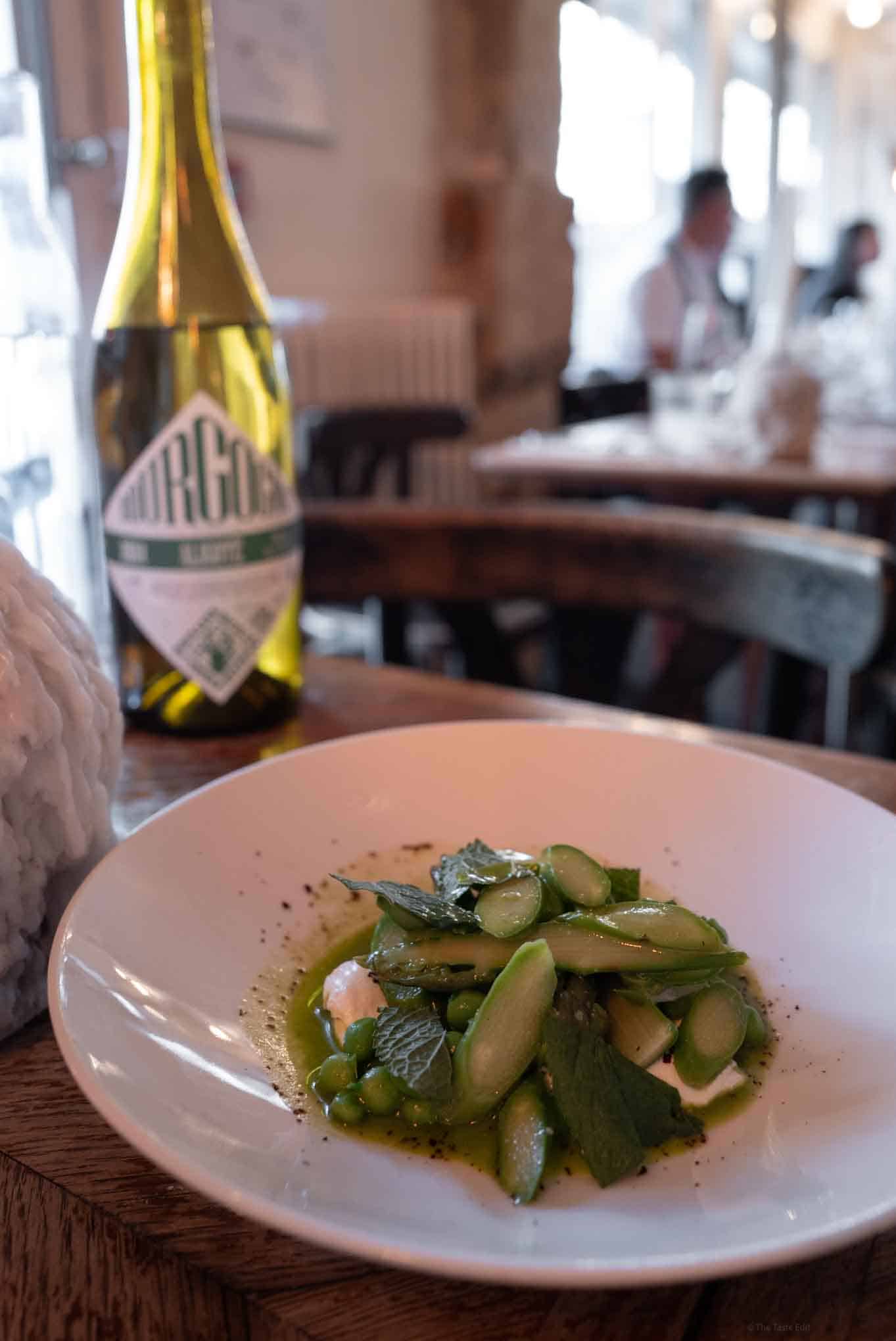
Dinner. Sur Mer is the small seafood restaurant from chef Olive Davoux, a serious cook with a deep instinct for fish and one of the better small natural wine lists in the area. If you can’t get a table, try Comptoir Sur Mer, her second, more casual room nearby. Soces is our favourite restaurant in Paris right now, a small room cooking with confidence and pouring wines we would happily drink anywhere. Early June is one of the most popular natural wine spots in Paris, evenings only, with rotating chefs and hard-to-get seats. They only take reservations for groups of four or more, everything else is walk-in.
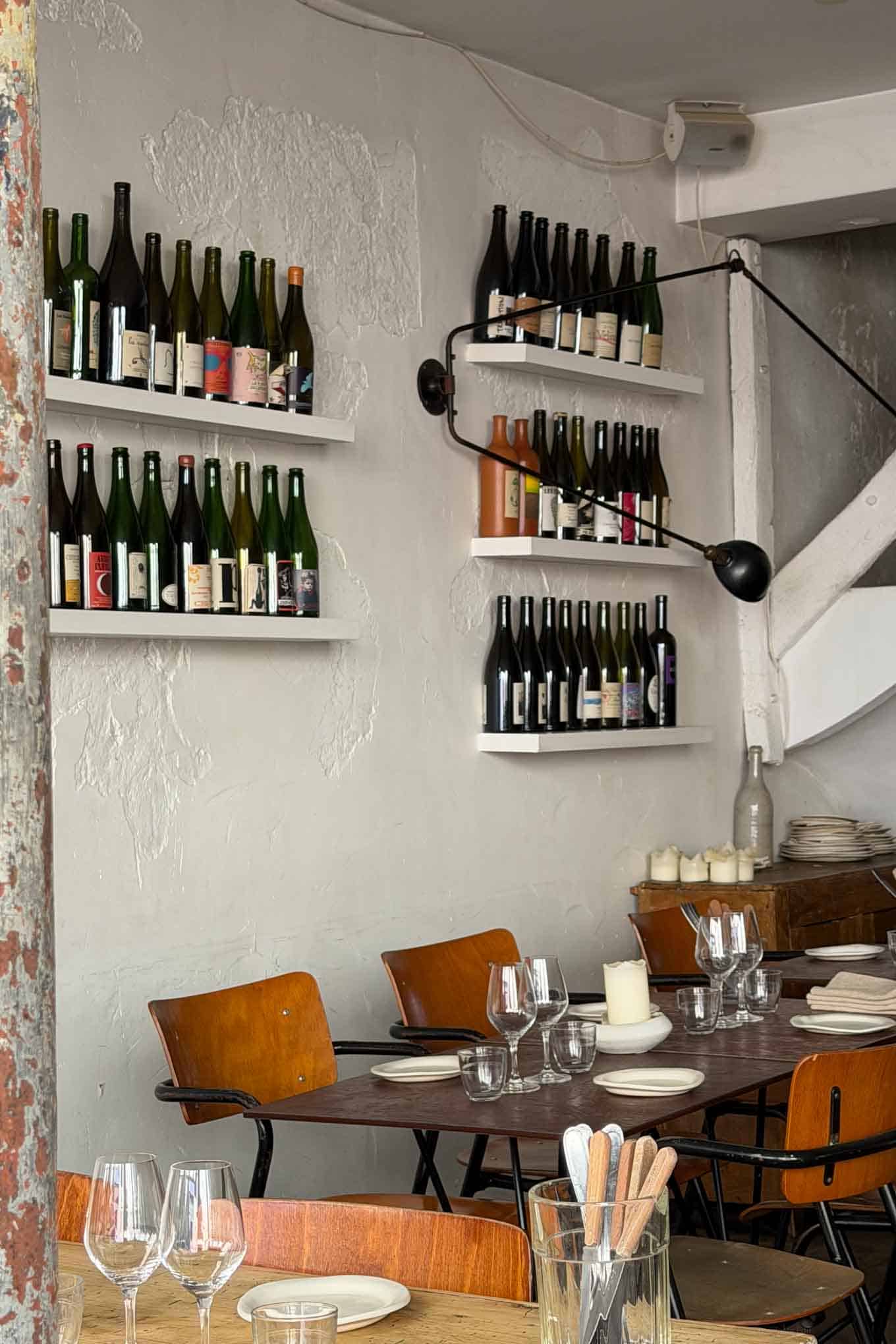
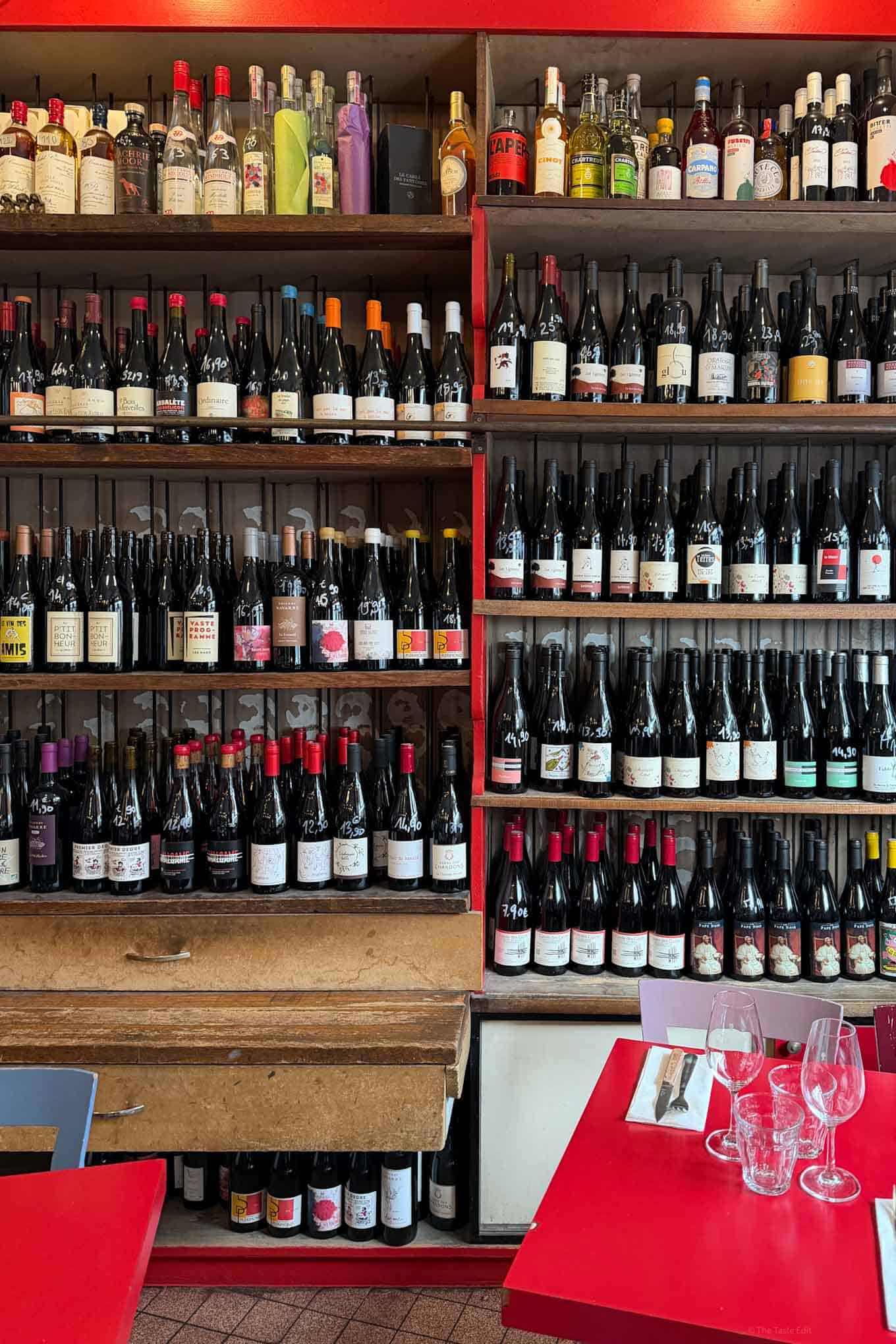
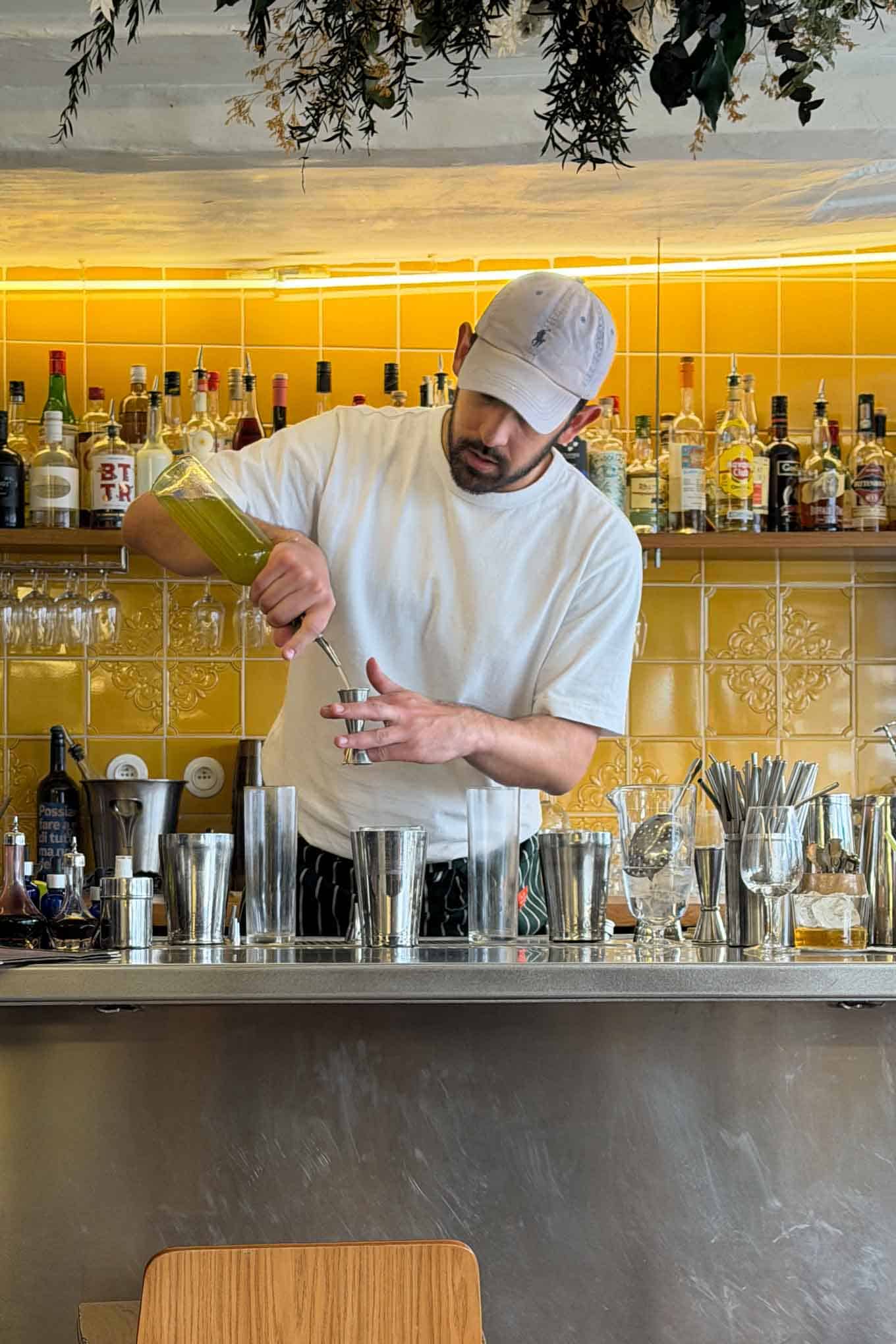
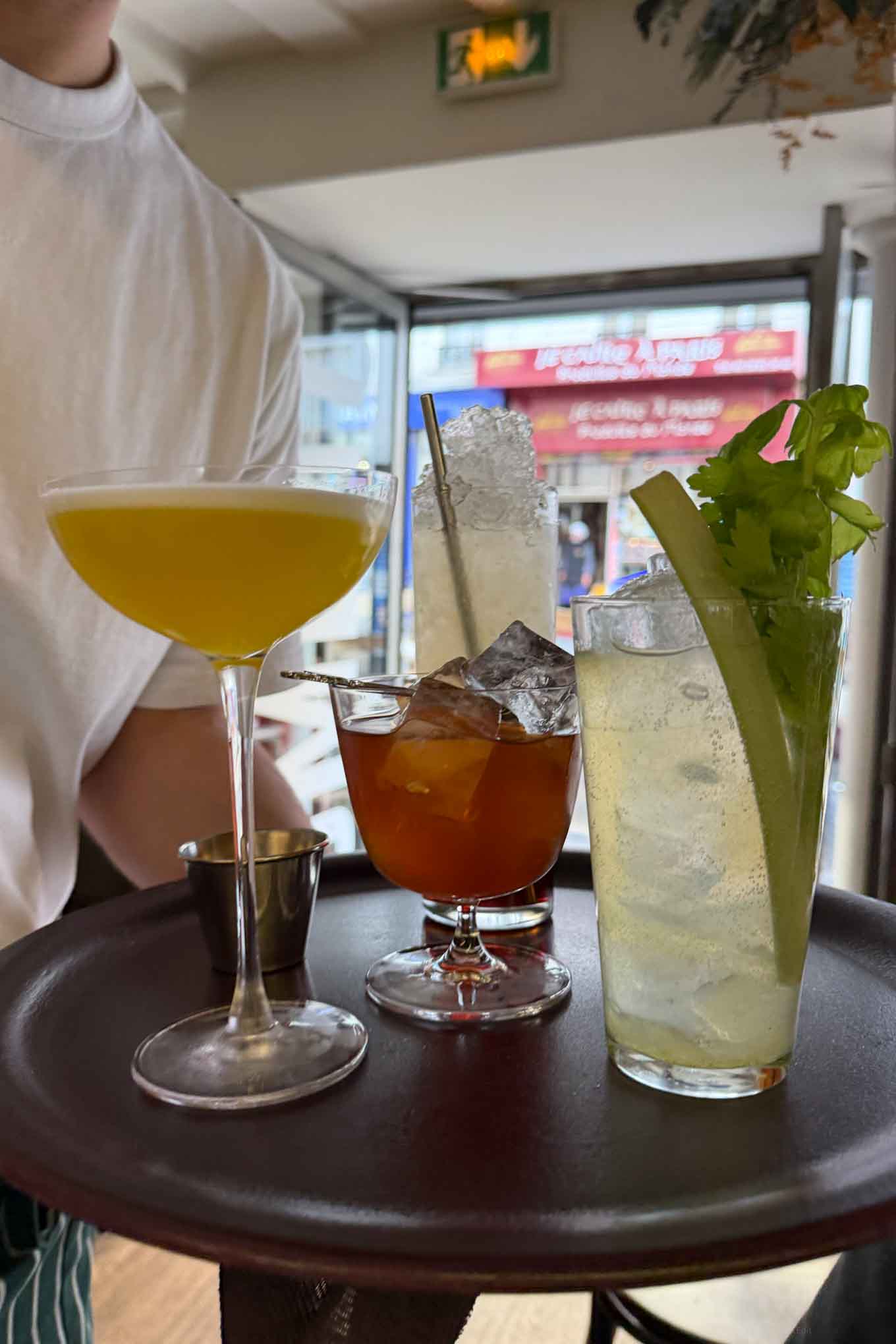
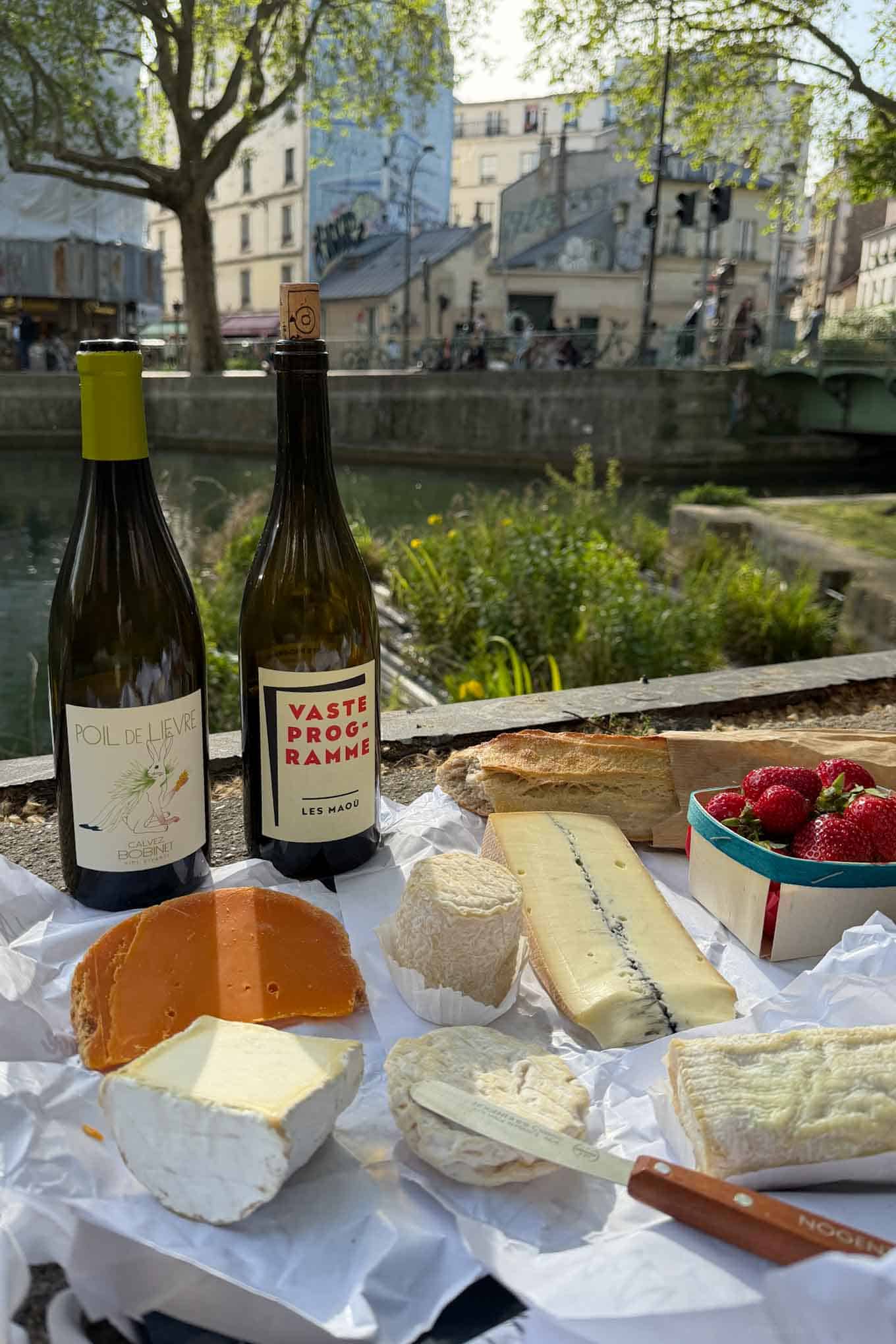
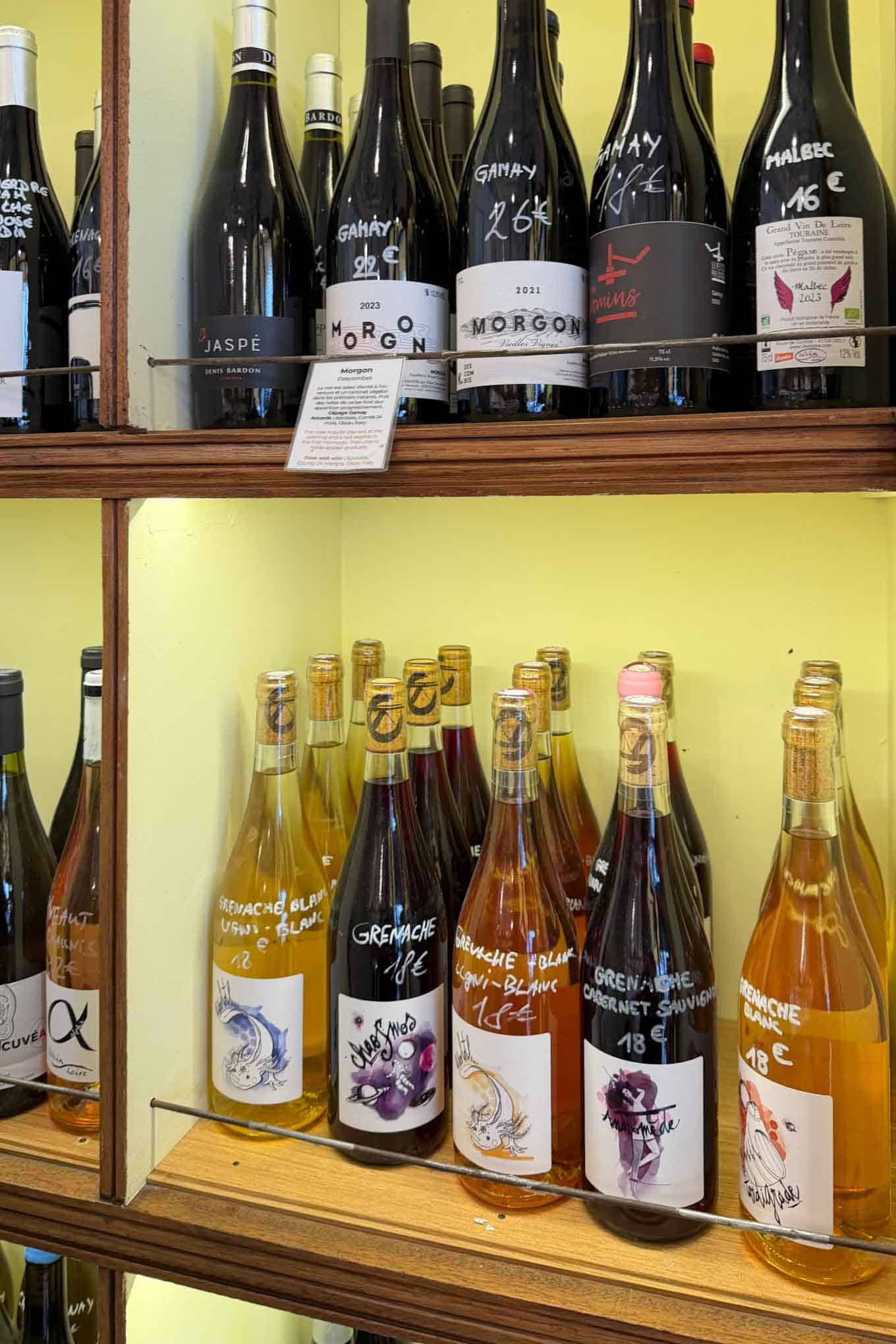
Wine bars and bottle shops. Le Verre Volé is the canal-side institution, equally good for a glass at the bar or a bottle to take with you for a picnic by the water. Mike’s Pizza at Le Citizen is a reliable spot for a slice and a glass, either at the bar or down by the canal. Combat in Belleville is the cocktail bar of choice when you want something other than wine, a small room from a team who understand elegance and restraint.
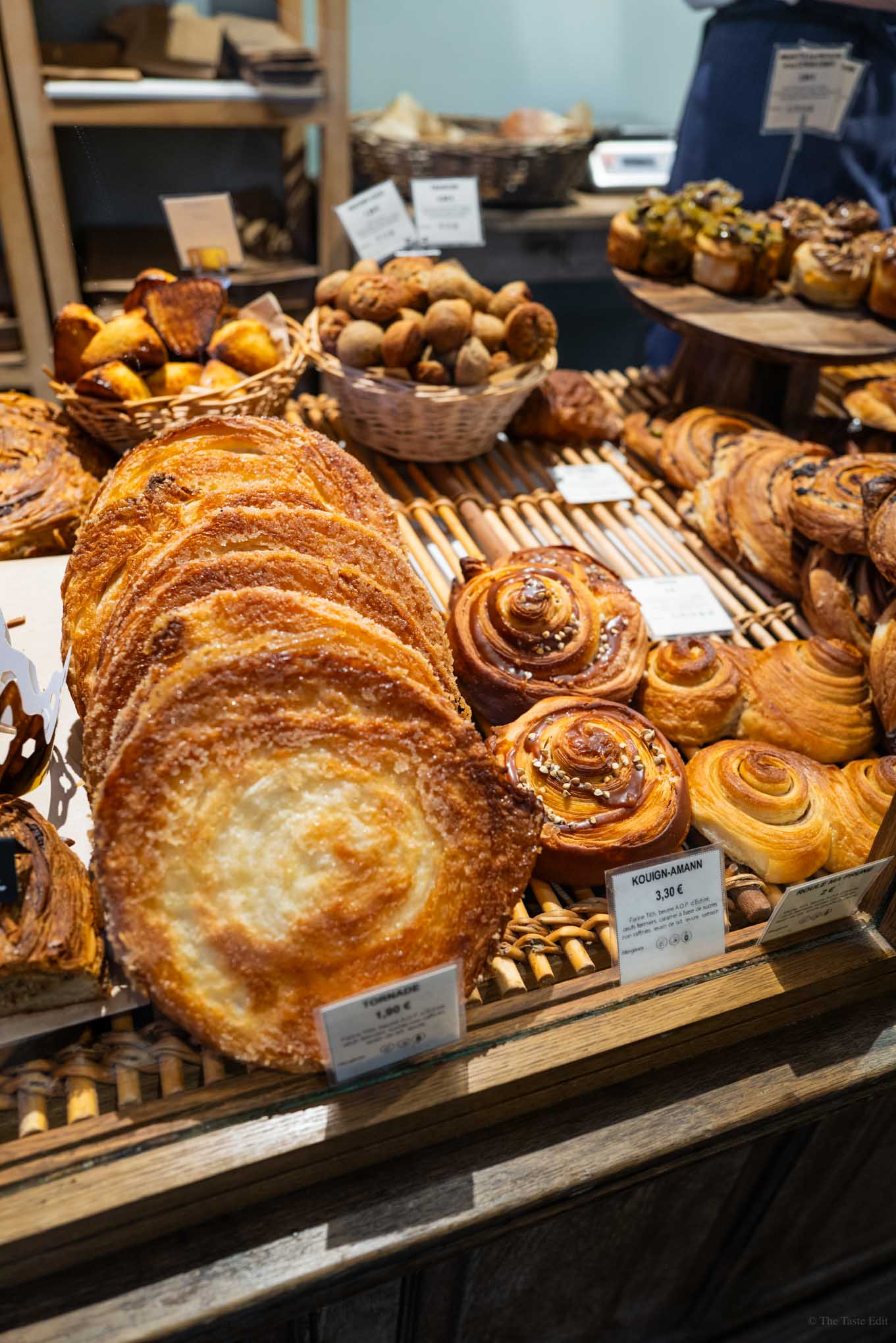
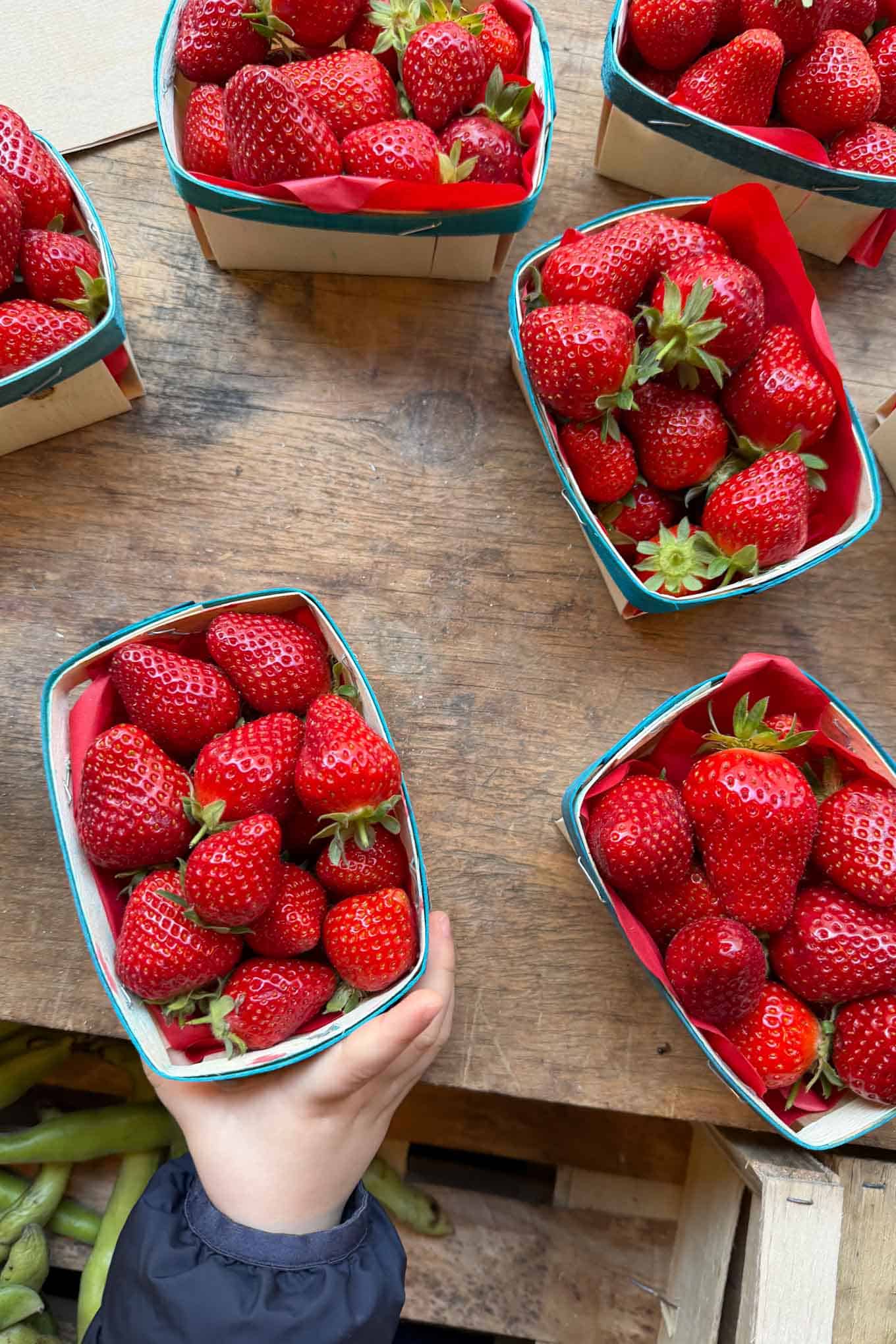
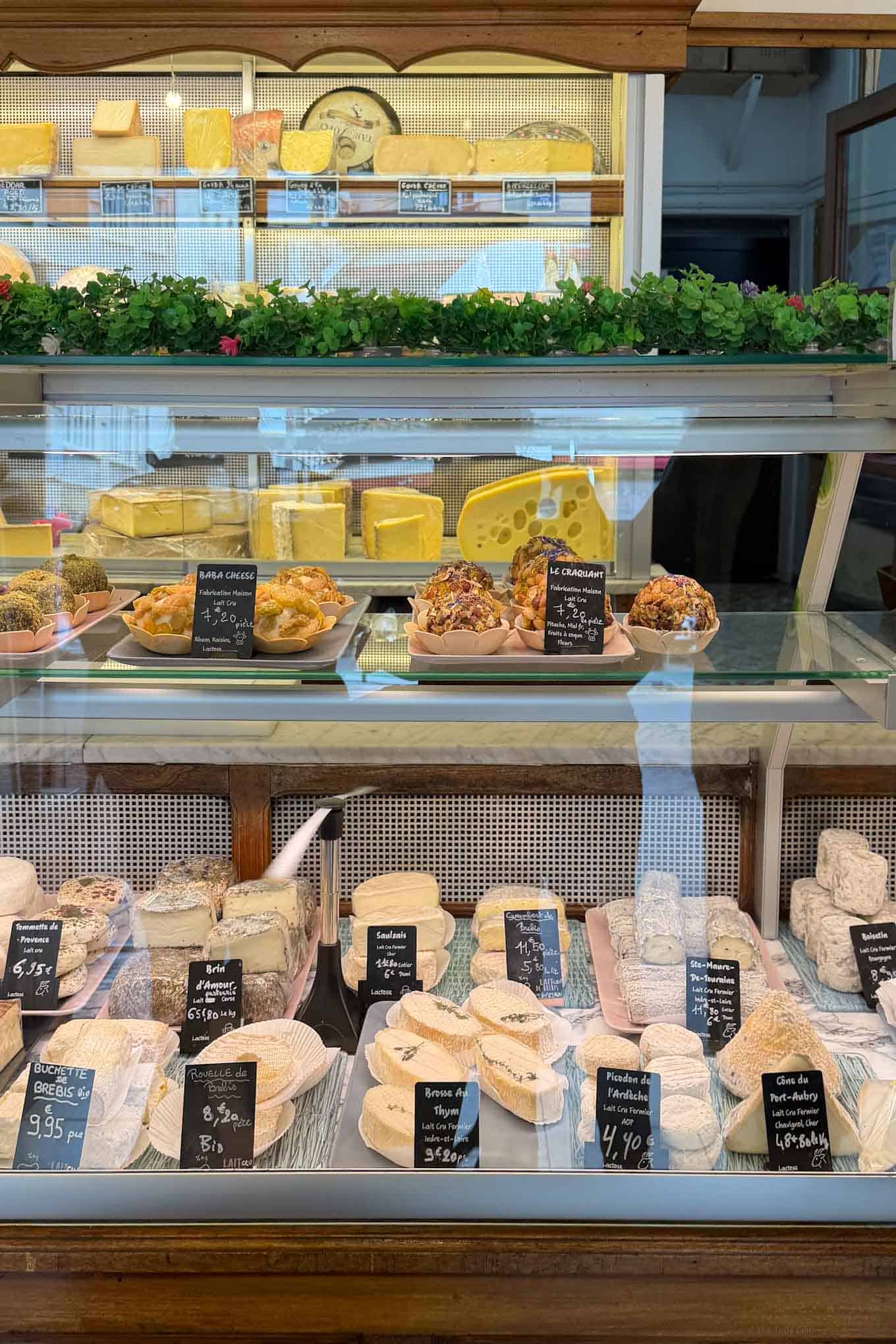
Picnic supplies. Sain Boulangerie for breads built on long ferments and pastries that justify the queue. Ten Belles for coffee and the morning staples. Fromagerie Jouannault, just outside the Marché des Enfants Rouges on rue de Bretagne, is our favourite place to pick up cheese, ask the team for whatever is at its peak that week. Satio is the small épicerie for everything else, fresh strawberries, saucisson, the things that make a canal-side picnic actually work.
Wandering. The Canal St-Martin is the spine of the neighbourhood, lined with bakeries, wine bars, and small boutiques. Belleville climbs up the hill to the east, where wine and food shape the daily rhythm and the tourists thin out almost entirely. The Marché des Enfants Rouges sits to the south in the upper Marais. There are several playgrounds and small parks scattered through the area, and the neighbourhood is full of young families, which is part of what gives it its quieter, more lived-in feel compared to other parts of central Paris.
On the radar. We have not been yet but La Grange Permaculture and Yaki Society are both nearby and on our list for the next trip.
Most weekend trips to Paris are built around the things you have already seen in photographs, the museums, the river, the obvious neighbourhoods. There is nothing wrong with any of them. But there is also a version of Paris that begins the moment you board the Eurostar, a version where the wine in your glass on the way home is connected to the bottle you opened at dinner the night before, and where the journey itself becomes part of the meal rather than a detour from it.
That is the trip Honey’s wine list makes possible. It is also, quietly, what we love most about living between these two cities.
The Edit, Paris 10th
Where to stay
Le Citizen Hotel, 96 Quai de Jemmapes, 75010 Paris, lecitizenhotel.com
Where to eat
Mike’s Pizza, at Le Citizen, 96 Quai de Jemmapes, 75010 Paris
Sur Mer, 1 Rue de Marseille, 75010 Paris, surmer.restaurant
Comptoir Sur Mer, 53 Rue de Lancry, 75010 Paris, surmer.restaurant
Soces, 32 Rue de la Villette, 75019 Paris, soces.fr
Early June, 19 Rue Jean Poulmarch, 75010 Paris, early-june.fr
Les Enfants du Marché, Marché des Enfants Rouges, 39 Rue de Bretagne, 75003 Paris
Le Boucher du Marché, Marché des Enfants Rouges, 39 Rue de Bretagne, 75003 Paris
Le Cambodge, 10 Avenue Richerand, 75010 Paris, lecambodge.fr
Les Enfants Perdus, 9 Rue des Récollets, 75010 Paris, les-enfants-perdus.com
Wine bars and bottle shops
Le Verre Volé, 67 Rue de Lancry, 75010 Paris, verrevole.com
Cocktails
Combat, 63 Rue de Belleville, 75019 Paris
Picnic supplies
Sain Boulangerie, 15 Rue Marie et Louise, 75010 Paris, sain-boulangerie.com
Ten Belles, 10 Rue de la Grange aux Belles, 75010 Paris, tenbelles.com
Fromagerie Jouannault, 39 Rue de Bretagne, 75003 Paris, fromagerie-jouannault.fr
Satio, 11 Rue Alibert, 75010 Paris, satio-epicerie.fr
On the radar
La Grange Permaculture, 3 Rue La Grange aux Belles, 75010 Paris
Yaki Society, 11 Rue Marie et Louise, 75010 Paris, yakisociety.com
The journey
Eurostar Premier, eurostar.com
Note: Eurostar provided support for the reporting of this story.