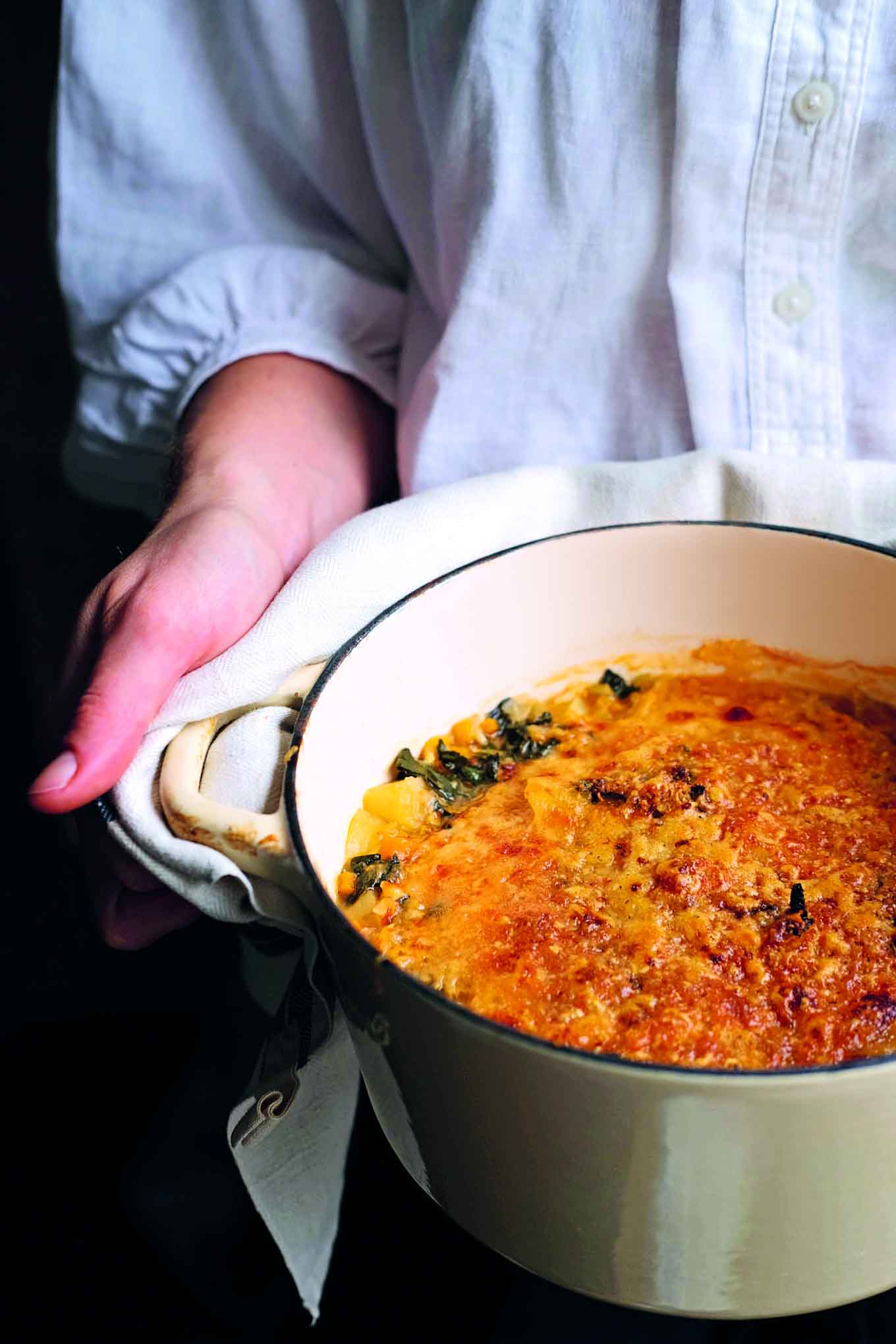
Words by Olivia Cavalli. Photo by Sophie Davidson
Ribollita is a dish built on repetition. It improves because it is reheated. It exists because people needed food that could stretch, hold, and still satisfy after days in the cold. That context matters, and it is why ribollita continues to make sense in a modern kitchen.
In Stagioni: A Contemporary Italian Cooking Cookbook to Celebrate the Seasons, Olivia Cavalli frames ribollita not as a fixed recipe but as a living one—shaped by circumstance, weather, and appetite. She writes:
“This is said to have originally been made by farmers. They would cook it in huge batches and reboil – hence the name – whenever they needed something to warm them up and fill their stomachs. Baking ribollita is something I thought of after I ate one near Montalcino. It was a freezing January day and we packed into a tiny restaurant on top of a hill, rubbing our hands as we huddled round the table. The ribollita was served in individual ceramic pots, the top bubbling with cheese. It was thick and dense, rich and comforting, and warmed you right through. You can, of course, skip the baking stage and eat it the traditional way: re-boiled and drizzled liberally with extra virgin olive oil. Cheese is not traditional, but always welcome.”
If you cook with the seasons and prefer Italian food that feels lived-in rather than performative, Stagioni: A Contemporary Italian Cooking Cookbook to Celebrate the Seasons is worth adding to your shelf.
Baked Riboletta. Stagioni
Ingredients
- 250 g 9oz cooked cannellini beans
- extra virgin olive oil
- 1 onion, finely chopped
- 2 carrots, finely chopped
- 2 celery sticks, finely chopped
- 2 garlic cloves, very finely chopped
- pinch of chilli flakes, optional
- 100 g (3½ oz) cavolo nero, stems removed and leaves shredded
- 160 g (5¾ oz) Savoy cabbage, shredded
- 200 g (7 oz) potato, peeled and cut into small cubes
- 1 heaped tbsp tomato purée
- 1 litre (1¾ pints) water
- 2 bay leaves
- 1 rosemary sprig
- about 150g, 5½ oz stale bread, torn into 2cm/¾in chunks
- 60 g (2¼ oz) Parmesan, finely grated
- 2 handfuls of breadcrumbs
- fine salt
Instructions
- Blend half of the beans with a splash of water (about 3 tbsp). Set aside. Cover the base of a heavy-based saucepan with extra virgin olive oil. Add the onion, carrots and celery, with a pinch of salt. Stir so everything is glistening in oil and set over a medium-low heat. Cook with the lid ajar for 15–20 minutes until soft and translucent, stirring every so often. Add the garlic and chilli, if using, and stir for a minute or so to avoid burning.
- Add the cavolo nero, cabbage, potato, tomato purée, beans (and bean purée). Pour in the measured water and add 1–2 tsp salt. Stir, bring to the boil, then reduce the heat to a simmer. Add the bay leaves and rest the rosemary on top (so it flavours without the needles getting in the soup). Leave to cook for around 30 minutes, until the vegetables are soft.
- Discard the rosemary and add the bread. Stir so that it’s covered in the soup and leave to cook for a further 10 minutes. You should have a thick mush with all the ingredients melding together. Taste for seasoning, adding more salt if needed. Leave to cool and sit for a few hours, preferably overnight. If leaving longer than 8 hours or so, refrigerate until ready to use.
- When you’re ready to eat, preheat the oven to 190°C fan and reheat the ribollita gently on the hob, adding a splash of water if necessary. Pour into an ovenproof dish, sprinkle the cheese and breadcrumbs on top and drizzle with extra virgin olive oil. Bake for around 25 minutes, then switch to a preheated grill for another 5 minutes or so, until the top is golden and bubbling. Remove from the oven and leave to cool for a few hours, preferably overnight, in which case refrigerate until ready to use.
Extracted from: Stagioni: Contemporary Italian Cooking to Celebrate the Seasons by Olivia Cavalli (Pavilion, HarperCollins Publishers). Image credit – by Sophie Davidson